
Help page

JSONBuddy Help

Picking the right editor view for large JSON data

Prefer a text-oriented workflow for large JSON data, then test the current view and limits with the files you actually need to inspect.

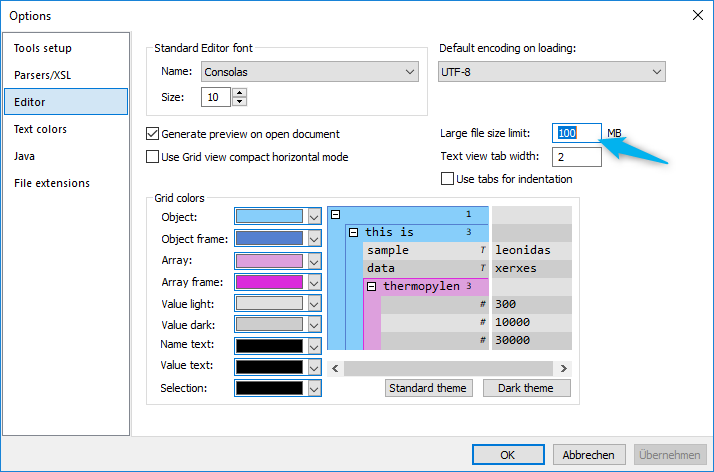
JSONBuddy for Windows Options dialog showing the large-file view limit setting
Authentic Help evidence of the historical large-file option; current availability and thresholds require confirmation.

Choose the view for the data shape

Grid presentation can be useful for structural inspection, but wide or deeply nested large data can demand substantial processing. Start with a text-oriented view when the task is to browse, search, or diagnose a large document, and only switch to a structured view when it remains responsive for the required work.

Test the current large-file behavior

  1. Set the intended default view in the current editor settings.
  2. Open a representative large file and record the selected view and observed behavior.
  3. Use a smaller disposable sample before changing any limit or view option.
  4. Validate or process the final output with an appropriate large-data workflow.

The historical Help names a megabyte threshold and edition-specific capability. Confirm current view names, thresholds, licensing, memory behavior, and editing support before publishing a performance expectation.

Related tasks

Separate browsing, editing, and validation decisions

A large-data view may be ideal for locating a value without being the right place for a structural edit. Decide whether the immediate outcome is to browse, search, make a small change, pretty-print a file, or validate a contract. Use the narrowest operation that meets that outcome and preserve the original input until the result has been checked.

For a document with many sibling properties, a grid can require more work than a text view. For a deeply nested object, folding and pointer navigation may offer a safer way to reach the relevant section. Measure the current workflow with representative data rather than extrapolating from a historical support example.

Keep a concise note of the selected view and test result for the team.